Why will I fight for a PhD in this era? A naive retrospective and rant in the age of AI
Published:
As an aspiring (and far from fully-fledged) mathematician1, I am in the loop regarding the current “dystopia” in mathematics orchestrated by major AI companies—you know who. If you follow current social media, you might have seen internet grifters and trolls claiming that “math is solved.” In this post, I would like to pour out my naive take while ranting about the current situation.
First of all, I will be transparent about my sources of thought. In machine parlance, I digested the following “dataset” to “generate” this post “organically.” Actually, you should read them as well to get in touch with what is really going on in academia for students like us!
Articles:
- Terry Tao: What should we tell our students? (a great article from A. Lozano-Robledo for us students)
- The Dialectical Theorem (GOATed article of what will come in the future)
- AI Views (I did not have enough energy to read them all at the time this article was written, but a student should read Parts I-IV, which I think are the essentials. If you like to read more into the recent evening, kindly digest Part V)
Videos:
- Recent Prof. Terry Tao video on the change of how we view math
- A not-so-recent take from Prof. Terry Tao about mathematics in the age of AI
- The 3B1B video stating there’s never been a better time to go into math
All in all, I will base my take on the articles instead of the videos. I like to read more than watch, lol.
As of now, I can say that LLMs are yet to produce highly-polished articles as their writing is still sloppy, and they cause disruption, such as the severe misalignment conducted by AIs. However, I cannot reject the possibility that LLMs will overcome this matter; in the span of just three years (2023-2026), the growth of AI in mathematics has been exponential. As I realized during my rigorous exams at UNIPD, I am not gifted as a genius, but rather I am gifted as a learner. I survived and won awards because I accumulated tools that made the problems look like a joke. But since I do not possess the innate creativity and intuition on the level of von Neumann (or any great mathematician like Terry Tao!), I must disclose that I am pretty much scared of what will come three years from now when the machines become the ultimate learners. Heck, even what will happen a year from now?!
Therefore, my resolve to pursue a PhD has been dwelling heavily on my mind. Well… I believe most of my colleagues know my reason for doing a PhD is simply for the sake of conducting research. And to be frank, it is FAR from a good reason. For instance, you can simply start working in the industry to solve problems that I would argue are still at the research level. You can work at companies like Google, Apple, or whatever you name, which usually hire Master’s degree holders. All in all, in my current state, a Master’s degree is actually enough if I want to get a decent job.
What differentiates aiming for a PhD from a Master’s, then? Simply put, it is the reason for doing it.
- You can have a reason as simple as, “Yeah, I want to do it just because.” Actually… this is quite a good reason as long as you can have a good answer to the second question below.
- You can have noble reasons, like wanting to solve the catastrophe of your country’s academia with your PhD skillset. Reality check: no, you can’t. You will waste your life setting this as your primary goal. Unless one has been as good as Ngô Bảo Châu.
- You can have a reason like wanting to push your boundaries so as not to waste your potential. Umm… you can do this without a PhD. For example, working in R&D or simply starting your own company works just as well.
- You can also have a “silly” reason, like wanting to have “Your Name, PhD” on your name card to show off to the general public. Another reality check: a PhD is rarely about immediately providing a world-shattering contribution. Rather, it is a beautiful, profoundly personal “zero-to-one” transition—a metamorphosis from a student into an independent craftsman.
- You can have an extremist view of wanting to “fight” against this AI dystopia by competing against the overwhelming tide of mass-produced, machine-generated theorems. However, this is not a sheer volume contest! Three years is enough for LLMs to “kill” your research if you only compete on output. Just look at the 700-ish papers OpenAI released.
Before coming to my reason for committing to a PhD, one must realize that not everyone (and I think not many!) is fit to spend 3-5 years of their lifetime running this “marathon.” One should know a rough answer to these questions first:
“What do I want to do with this degree?”
A classically bad answer is to delay unemployment for another few years. Please, do not even attempt to do a PhD because of this. The more you delay, the worse your career options become. This is especially true if you are Indonesian, as the country suffers from very bad ageism and an overqualification situation.
And actually, being able to construct the next question was the turning point in my reasoning for doing a PhD!
“Why do I want to do a PhD in this certain topic (just name your dream topic!)?”
As you can see, I am not stating the general version, which is “Why do I want to do a PhD?” Sorry to say, the general version of this question sucks, and it only leads you further astray from wanting to do a PhD for a good reason. What makes your reasoning good is answering this specific question! As it is with conducting real research, we should ask specific questions instead of general ones. I can say, after being able to formulate this question, I am more than sure I want to do my PhD in Mathematics (I am not telling my readers the details of my specific topic, but you can deduce it from what I have written across my homepage). Actually, there is no right answer here! Simply being able to formulate this question confidently is enough to ensure you will be fine with your PhD.
Notice that these two questions do not relate to the AI dystopia at all regarding my reason to do a PhD. That falls into the third formulation regarding one’s reason to do a PhD:
How do you view AI for your research?
My naive take on this is that it never begins with AI, but with how we use AI! Thinking that AI will “kill” researchers in the future is far from a good reason to avoid a PhD after all. One scenario simply points to the fact that if no human is conducting research, how will the AI progress? With this level of inefficiency, as shown by the cost of tackling the Navier-Stokes equation, I doubt AI itself will replace humans anytime soon. Within research itself, machines are not reliable (yet) to verify frontier research outputs, and AI companies themselves are still too reliant on human input (I think the term is reinforcement learning, with industry consensus that AI requires thousands of human hours in RLHF just to evaluate its own outputs) to progress. How can AI “kill” researchers if they are too reliant (right now) on humans?
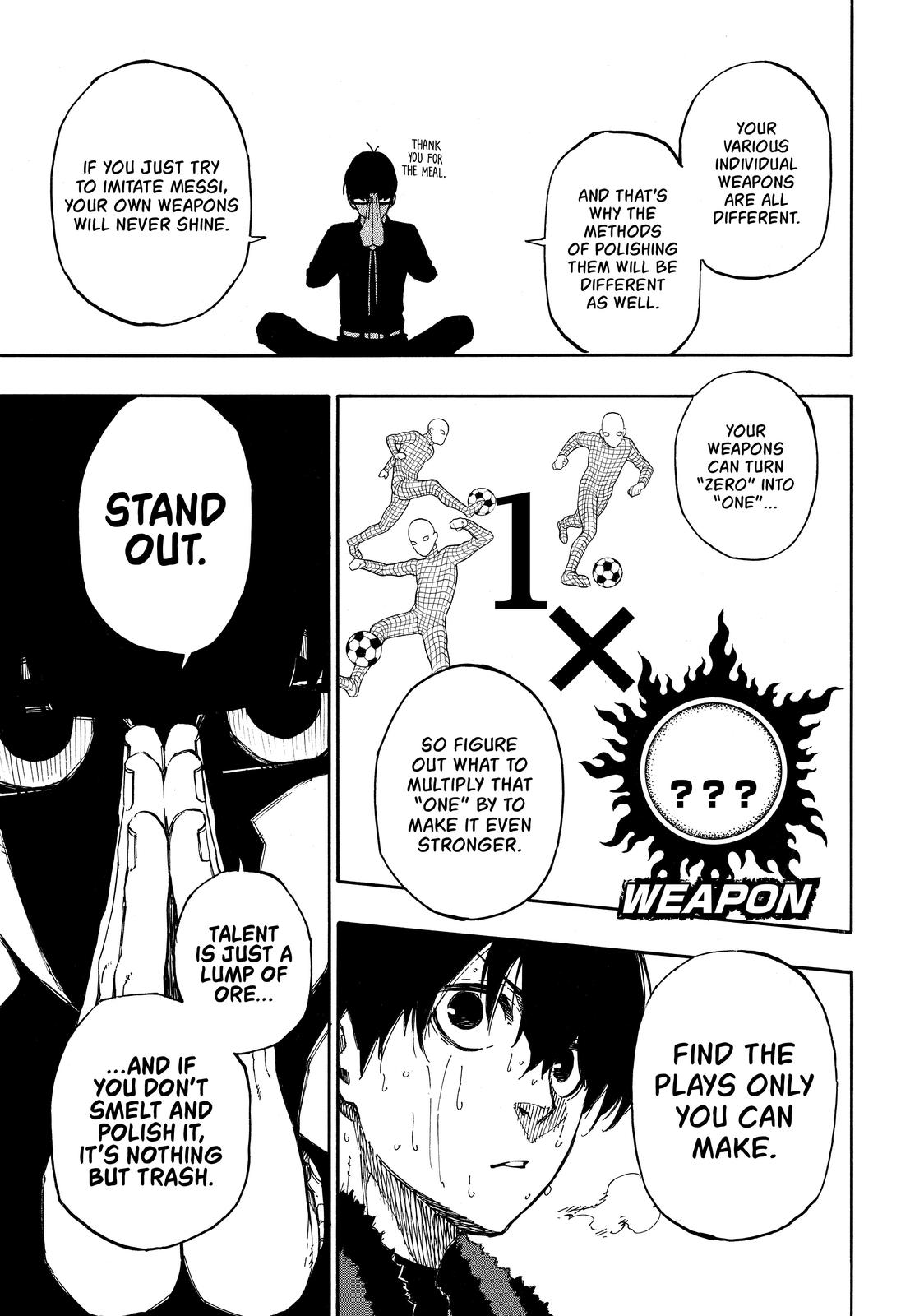
On the other hand, one of the main reasons we do a PhD is to undergo that zero-to-one transition—in our case, starting to do research from nothing. This transition is deeply human and often requires academic isolation; as I have learned, I excel at being by myself, yet I hate it. Yet, pushing through this solitary struggle builds unparalleled resilience. Indeed, one could just discreetly use AI to push out five to ten papers for their whole PhD. However, what happens to one’s growth as a REAL mathematician if one’s mathematical “art” is not fully their own? Since I am an avid fan of Prof. Terence Tao (I hope I can meet him someday!), I would love to give the analogy that doing a PhD is like being under an apprenticeship with a master craftsman. I view mathematics itself as an art of craftsmanship. How can one learn to craft a new masterpiece if one does not understand prior masterpieces? Of course, over time, one will use the aid of machines—which in the case of mathematics, is the aid of AI. However, what distinguishes a master craftsman from a fraud is whether they can still do everything without the aid of fancy machinery.
Now, why do I believe mathematics will live on? First of all, ethically utilizing AI might limit one’s sheer output, but what will you become if you only act as a meat buffer for generating theorems? At the end of the day, your theorem is yours—not the AI’s. A simple check on whether you are allowed to use AI follows this quote:
“If you’re nothing without this suit, then you shouldn’t have it.” — Tony Stark to Peter Parker in Spider-Man: Homecoming
If one is restricted to working without AI and cannot make anything—even the slightest idea—come to fruition, then one should refrain from using it! What is the meaning of a PhD if you merely become an interpreter for an AI at the end of the day?
I will be open about the fact that I often utilize AI to aid my study process. Well… I need to give credit where it’s due, as AI has assisted in my study preparation, note-taking, and even the writing of my articles!2
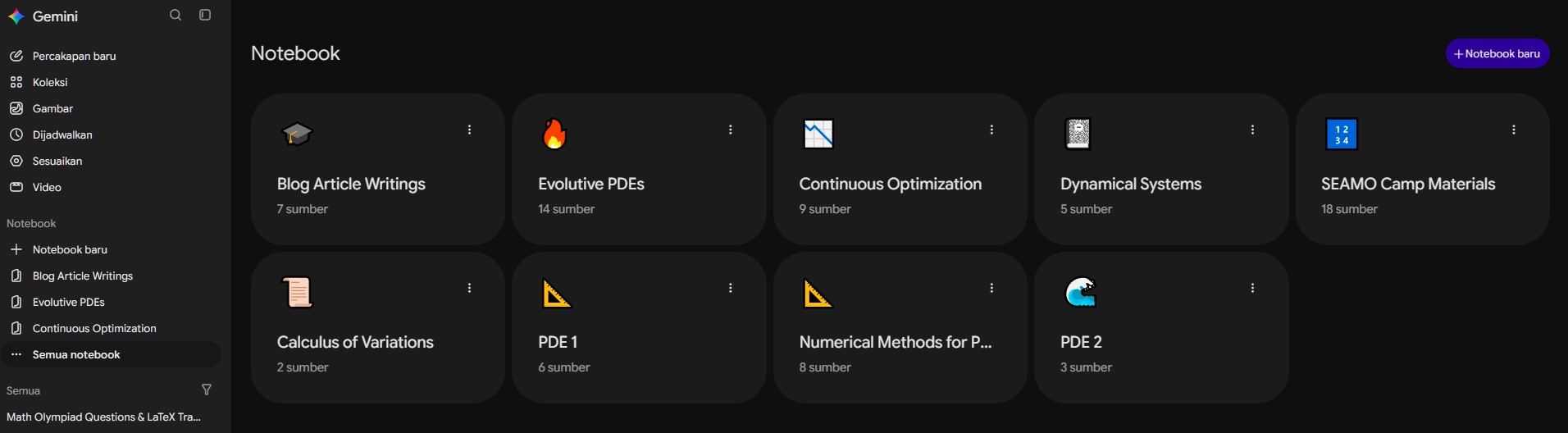
Indeed, as suggested by 3B1B, there has never been a better time to go into math. We can accelerate our growth if we ethically use AI for our work. Again, my ethical rule for using AI is simply Tony Stark’s quote. I personally view AI as my extension—to verify super tedious inequalities, to verify my ideas, to streamline my reasoning, and to improve my skillset. Having AI as your assistant also helps you conduct surface-level research, which can expand your general knowledge and give you a better grasp of problem-solving! All in all, if you use AI to extend your horizon, mathematics as a field will be happy with this direction.
At the end of the day, I stand on the optimistic side of mathematics in the age of AI, and this is also my reason to try and pursue a PhD, with an ounce of realistic take that I will stay vigilant to the current progress of AI. Hopefully, I will get one, which I hope will only be a matter of time. In summary, being able to (supposedly) have a good PhD experience comes down to knowing oneself and being able to ask the specific question. Back again, a PhD has a huge opportunity cost that will take up a major part of your 20s (I assume most people do their PhDs in their 20s; I am 22 by the time this article is written! If things go well, I should start at 23 or 24!). Do not fret over AI; assimilate appropriately with it. As long as you can be fond of your craftsmanship, even if your specific field “dies” during the process, you can always shift—as Gödel himself proved, mathematics is incomplete.
- I am aware this may be taken into account for my PhD applications, and I would say this article stands as my "additional" statement of purpose. Perhaps we can say this is the public version of it. ↩
- Editorial Note: The proofreading, grammar fixes, and flow check of this article's draft were assisted by Gemini AI, as the author is fully aware of his own sloppiness in this regard. ↩


 TL;DR: I’ve spent years feeling like a fraud in mathematics, attributing my successes to luck or “easy” problems. But after reflecting on my rigorous Master’s at UNIPD, I realized the truth: I’m not a genius, I’m just a relentless learner. The exams didn’t get easier—I just got stronger.
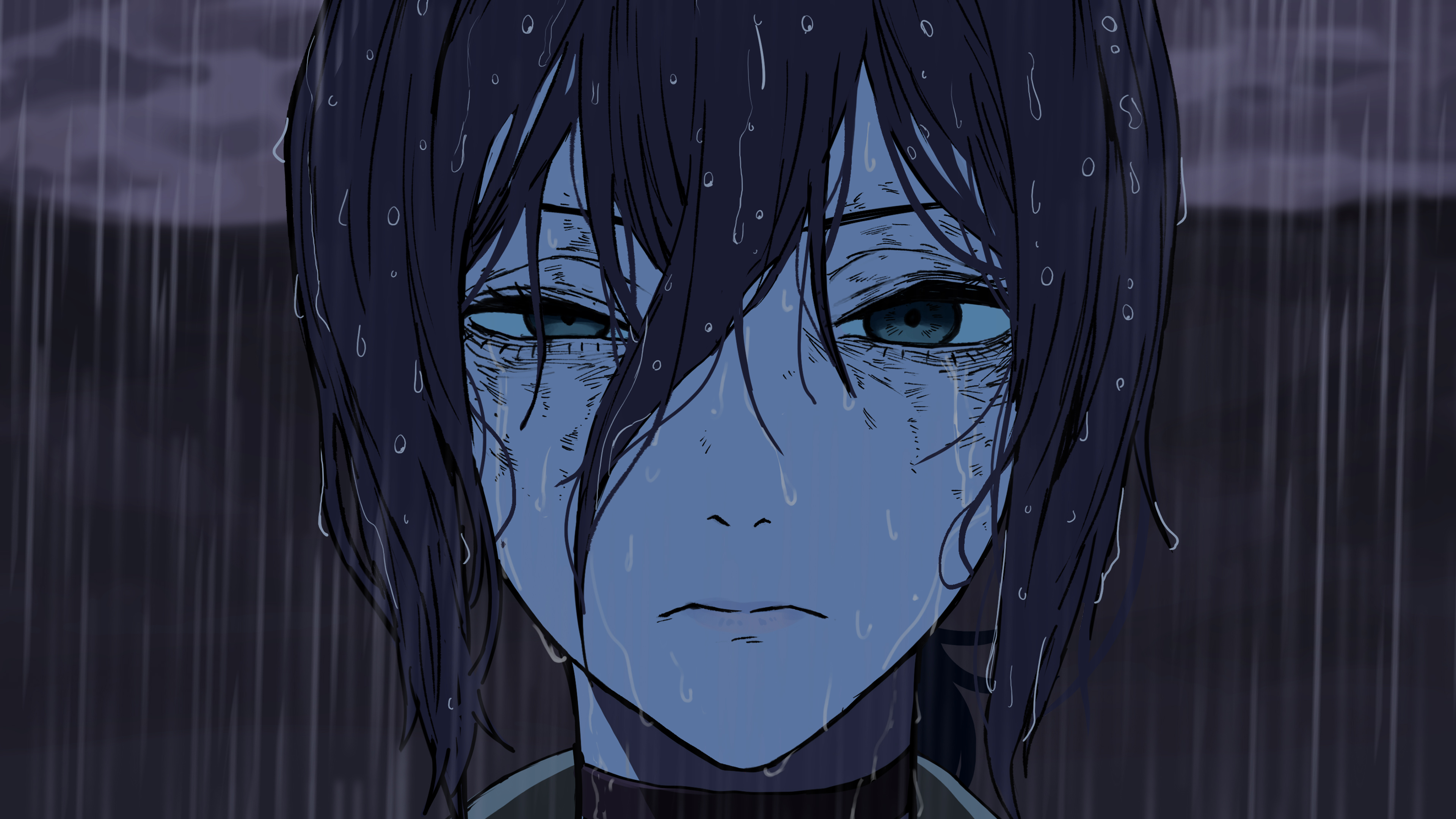 A personal rant on the isolation of academic pursuit and the price of ambition. An honest reflection of a big dream: perjuangan S2 di UNIPD, kesepian di tengah prestasi, dan realita ‘berproses’ sendirian di usia 20an.